From Conversation Starter to Problem Solver: Bridging the AI Disconnect
Executives pushed for AI as a conversation starter, for your clients it was a conversation ender. How HT Blue bridged that gap.
For more than a year, a singular mandate has echoed through executive suites: adopt AI. Leaders, rightly enamored with the potential of large language models, saw a golden opportunity. They pictured AI as the ultimate conversation starter, a modern, intelligent front door for their business that would engage clients and signal a commitment to innovation.
The reality, for many, was a slammed door. Customers, drawn in by the promise of an intelligent chat, instead found rigid scripts, unhelpful loops, and a frustrating inability to solve their actual problems. The conversation starter became a conversation ender. The failure was not in the ambition but in the understanding of what AI should be. It was the digital equivalent of hiring a brilliant linguist for a plumbing job. The tool was powerful, but the application was fundamentally wrong.
At HT Blue, we have seen this disconnect firsthand. The rush to deploy conversational AI often overlooks the most critical element: human intent. A customer does not visit your website for a conversation. They come to resolve an issue, purchase a product, or find a specific piece of information. The conversation is a means to an end, not the end itself.
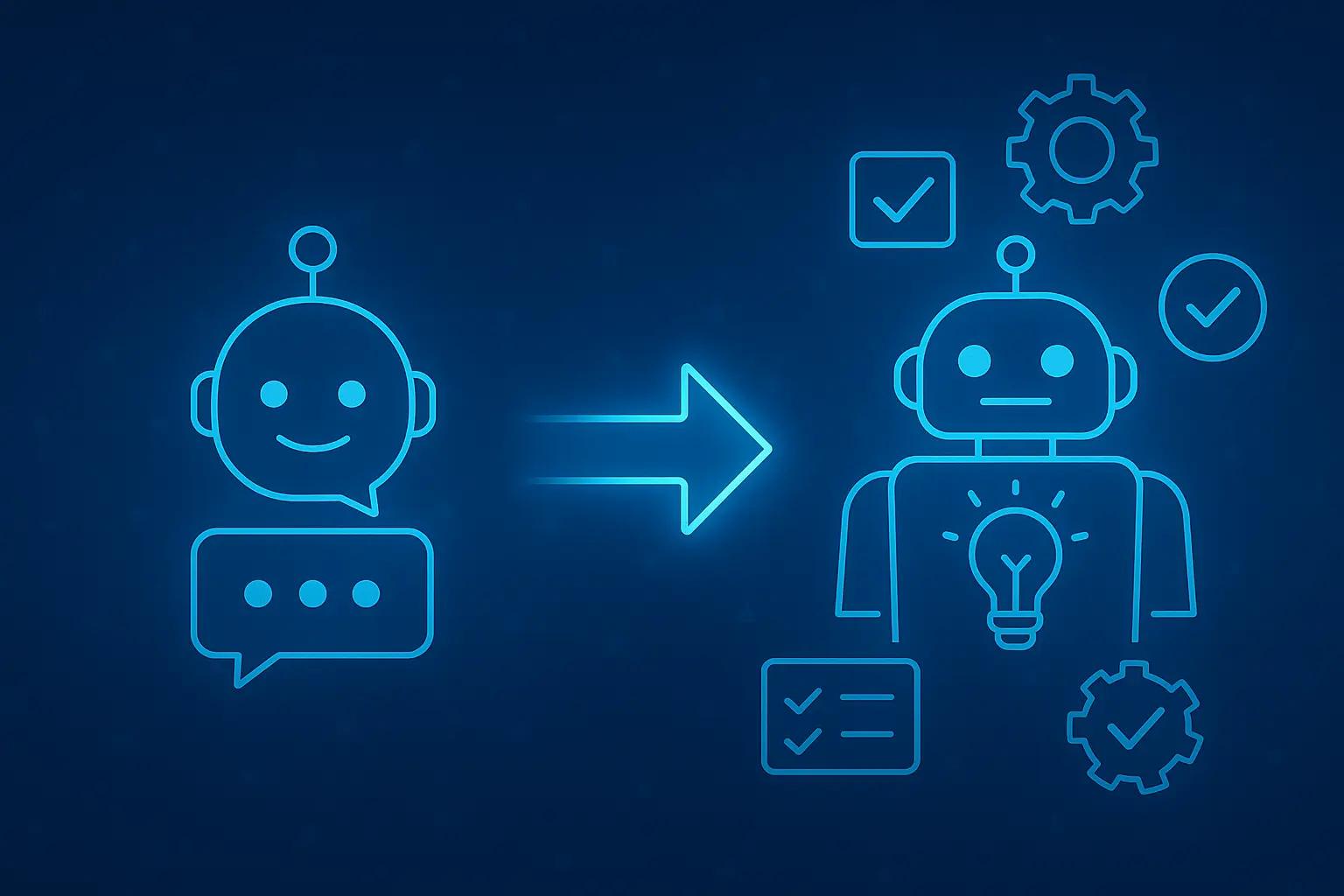
This is where we shift the paradigm from conversational AI to intelligent automation. It is a move from a system that merely talks to a system that acts. Using agentic frameworks, we build systems that do not just parse language, they interpret intent. These are Multi Component Process (MCP) systems designed to execute complex, multi step tasks that reflect what a user actually wants to accomplish.
Consider a common scenario. A client wants to know the status of a complex order involving parts from different suppliers. A basic chatbot might answer "What is your order number?" and, at best, retrieve a top level status from a single database. If the information is siloed, the conversation ends. The client is frustrated.
Our approach is different. An intelligent agent, grounded in a human centered framework, understands the user's true goal. It does not just talk; it investigates. The agent can query multiple databases, interface with legacy supplier systems, synthesize the fragmented information, and present a complete, coherent picture to the client. It can even initiate proactive steps, like flagging a delay and automatically generating a notification for the account manager.
The human employee is not replaced. They are elevated. They are freed from the mundane task of data collection to handle the exceptions and manage the client relationship, which is a far higher value activity. The AI becomes a tireless, expert assistant.
The latest trend in AI should not be about building more eloquent chatbots. It should be about creating robust, autonomous agents that can reliably execute tasks. The goal is not to simulate a conversation but to achieve a resolution. By focusing on the underlying process and the human intent, we build AI systems that do not just start conversations, they productively finish them. That is how we turn a conversation ender back into a powerful, trusted tool for business growth.