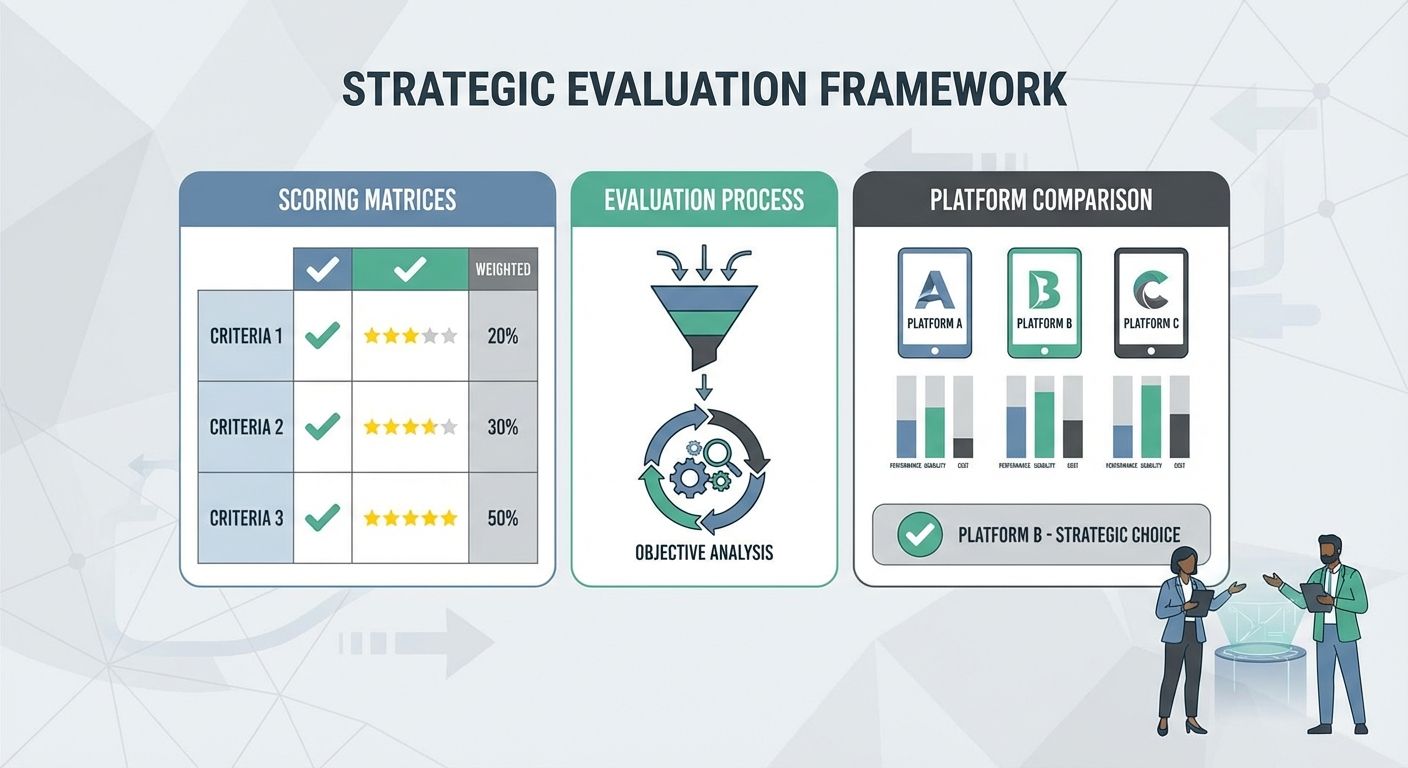
I've facilitated dozens of intranet evaluation and roadmapping sessions over the years, and I can tell you this much: the organizations that approach this process strategically end up light years ahead of those who don't. The difference between choosing the right platform and the wrong one isn't just about features. It's about understanding your organization's unique needs, having a framework to evaluate options objectively, and building a roadmap that actually gets you where you need to go.
Let me walk you through what happens during our intranet evaluation and roadmapping sessions, what we consistently discover, and how we score the leading platforms to help organizations make confident decisions.
The Discovery Phase: Uncovering What Really Matters
Every evaluation starts with discovery, and this is where most organizations realize their assumptions don't match reality.
We begin by assembling a cross-functional team. Not just IT. Not just Communications. We bring together stakeholders from HR, Operations, Leadership, and critically, representatives from different employee segments including frontline workers, remote teams, and desk-based staff. Each group has distinct needs that often conflict with each other.
What We Always Discover
The documented requirements miss the real pain points. Organizations come in thinking they need better document management or a cleaner news feed. Within the first hour of stakeholder interviews, we uncover that the real issues are fragmented workflows, tool overload causing employees to use 11 or more applications daily, and complete disconnection between headquarters and frontline teams.
Mobile isn't nice to have. It's mission critical. With 87% of companies now encouraging personal device usage for work, we consistently find that a significant portion of the workforce can't effectively use the current intranet. Frontline workers, field teams, and remote employees are essentially locked out of critical information because legacy systems weren't designed for mobile.
Search is broken everywhere. Employees tell us they spend hours every week hunting for information. They interrupt colleagues instead of finding it themselves. They duplicate work because they couldn't locate what already exists. Poor search functionality wastes more time and causes more frustration than almost any other factor.
Integration gaps are costing real money. When we map out the current technology ecosystem, we typically find 15 to 25 different tools that don't talk to each other. Employees are constantly context-switching, logging in and out of different systems, and manually transferring information between platforms. The productivity drain is enormous.
Nobody knows what success looks like. Most organizations can't tell us their current engagement rates, content effectiveness, or user adoption metrics because they've never measured them. You can't improve what you don't measure, and this baseline data becomes crucial for demonstrating ROI later.
The Evaluation Framework: How We Score What Matters
Once we understand the specific needs, we move into structured evaluation. This isn't about picking the vendor with the best sales pitch. It's about objectively scoring platforms against weighted criteria that reflect what actually matters to your organization.
Our Core Evaluation Categories
We use a weighted scoring system across seven primary categories. The weights vary by organization, but here's how we typically structure it:
Technical Capabilities (20%) This evaluates core platform functionality including content management, search capabilities, workflow automation, integration architecture, and AI/ML features. We're looking at whether the platform can actually do what you need it to do, both now and as you scale.
User Experience (20%) How intuitive is the interface? Can employees find what they need in three clicks or less? Does it work seamlessly across desktop and mobile? Is the experience consistent or fragmented? This category examines navigation, personalization capabilities, and overall design quality.
Integration & Extensibility (15%) Modern intranets must serve as a digital front door that connects to your existing tools. We evaluate API availability, pre-built connectors for common platforms like Microsoft 365 and Google Workspace, SSO capabilities, and the platform's ability to grow with your needs.
Mobile Experience (15%) Not just "does it work on mobile" but is it genuinely mobile first? We test core functions on actual devices, evaluate offline capabilities, and assess whether frontline workers can realistically use this every day.
Analytics & Insights (10%) What can you measure? How easily can you access the data? Can you track content effectiveness, user engagement, search quality, and adoption rates? Strong analytics transform your intranet from a cost center into a measurable business driver.
Security & Compliance (10%) Particularly critical for regulated industries. We evaluate data protection, access controls, compliance certifications, and audit capabilities. This becomes heavily weighted for healthcare, financial services, and government organizations.
Vendor Viability (10%) Company stability, customer references, implementation support, training resources, and long-term product roadmap. The best platform in the world doesn't matter if the vendor can't support your implementation or goes out of business in two years.
Scoring the Top IPS Providers: What We've Learned
Based on our evaluations across multiple industries and the latest analyst reports from Gartner, Forrester, and IDC, here's how the leading Intranet Packaged Solutions (IPS) providers stack up:
The Enterprise Leaders
Simpplr Named a Leader in the 2024 Gartner Magic Quadrant with particularly high scores in AI/ML capabilities. Simpplr excels at personalization and knowledge management. They scored highest in our AI and analytics categories, making them ideal for organizations that want data-driven insights into employee engagement.
Best for: Mid to large enterprises (1,000 to 50,000+ employees) that prioritize employee engagement and need comprehensive out-of-the-box functionality.
Watch out for: Pricing can be on the higher end, and maximum value requires strong adoption across the organization.
Workvivo (by Zoom) Also a Gartner Leader, Workvivo's strength lies in its social, community-focused approach. The Zoom integration adds significant value for organizations already using Zoom for video communications. They scored particularly well in our user experience and engagement categories.
Best for: Organizations that want to build strong culture and community, especially those with existing Zoom investments.
Watch out for: The social media approach may not convince stakeholders looking for pragmatic business cases around productivity and workflow integration.
Unily Strong performer for large, complex global enterprises undergoing digital transformation. Unily scored well across technical capabilities and security/compliance, making them a solid choice for organizations with complex organizational structures.
Best for: Global enterprises with 10,000+ employees, particularly those with complex needs and dedicated IT resources.
Watch out for: Requires significant investment in licensing and support. Implementation complexity is higher than some competitors.
LumApps Recognized as a Leader by both Gartner and Forrester. LumApps' AI-powered personalization and seamless integration with Google Workspace and Microsoft 365 make it particularly attractive for organizations heavily invested in those ecosystems.
Best for: Mid to large organizations wanting deep Google or Microsoft integration with sophisticated personalization.
Watch out for: Best results require commitment to their personalization approach and content governance model.
Strong Performers for Specific Use Cases
Staffbase Excellent for organizations with significant frontline or deskless worker populations. Staffbase's mobile-first approach and multichannel communication capabilities scored highest in our mobile experience category.
Best for: Retail, manufacturing, healthcare, and other industries with large frontline workforces.
Watch out for: Less suited for environments where knowledge work and deep collaboration are primary needs.
MangoApps Comprehensive platform with strong marks for consolidating multiple systems. MangoApps scored well across most categories with particular strength in integration capabilities and support for both desk and frontline workers.
Best for: Organizations looking to consolidate multiple tools into a single platform while supporting diverse employee populations.
Watch out for: May require customization for highly specific use cases.
ThoughtFarmer Known for exceptional customer service and ease of use. ThoughtFarmer scored highest in our vendor viability and user experience categories, with customers consistently praising their support and implementation approach.
Best for: Mid-sized organizations (500 to 5,000 employees) in regulated industries like financial services, legal, and healthcare that value personalized support.
Watch out for: May not have the same enterprise-scale features as larger competitors.
Specialized Solutions
Confluence (by Atlassian) Strong for organizations already using the Atlassian ecosystem. Excels at knowledge management and documentation but requires significant configuration to function as a full intranet.
Best for: Tech companies and organizations with strong existing Atlassian investments.
Watch out for: Not a purpose-built intranet; requires additional tools for communication, engagement, and personalization.
Microsoft SharePoint/Viva The 800-pound gorilla in the room. Many organizations already have SharePoint through their Microsoft 365 licenses. Modern SharePoint combined with Viva Connections can create capable intranets.
Best for: Organizations with deep Microsoft investments and dedicated SharePoint expertise.
Watch out for: Out-of-the-box SharePoint provides infrastructure, not a complete intranet experience. Requires significant customization and ongoing maintenance.
The Roadmap: Turning Evaluation Into Action
Scoring platforms is only half the battle. The real value comes from the roadmap we build together.
Phase 1: Foundation (Months 1 to 3)
We start with quick wins. Migrate critical content, establish governance structure, train core champions, and get basic functionality live. The goal is demonstrable value within 90 days.
Phase 2: Expansion (Months 4 to 6)
Roll out to broader employee populations, enable advanced features like personalization and AI-powered search, integrate with priority business applications, and begin measuring engagement and adoption.
Phase 3: Optimization (Months 7 to 12)
Analyze usage data, refine content strategy, expand integrations, build custom workflows, and establish the intranet as the true digital front door for your organization.
Ongoing: Evolution
Technology evolves. Your business evolves. The roadmap includes quarterly reviews to assess new capabilities, adjust strategy, and ensure the platform continues meeting your changing needs.
What Makes the Difference
Having evaluated dozens of platforms and supported countless implementations, here's what separates successful projects from failed ones:
Executive sponsorship matters more than features. The best platform in the world fails without visible leadership support and adequate resources.
Change management is non-negotiable. Technology is 30% of the solution. The other 70% is getting people to actually use it. Budget for training, communication, and ongoing engagement.
Start with use cases, not features. Don't get distracted by flashy demos. Focus ruthlessly on solving specific problems for specific employee segments.
Measure everything from day one. Establish baseline metrics before launch. Track adoption, engagement, and business outcomes continuously. Use data to guide decisions and demonstrate ROI.
Plan for governance. Content without governance becomes noise. Establish clear ownership, publishing standards, and review cycles from the start.
The Bottom Line
The intranet market is crowded, and vendors are getting better at marketing. But underneath the polish, some fundamental truths remain: the right platform depends entirely on your specific context, your organizational needs, and your capacity to implement well.
Our evaluation and roadmapping process cuts through the noise. We help you understand what you actually need, objectively score platforms against those needs, and build a realistic roadmap for implementation and success.
The organizations that invest time in this upfront work consistently achieve better outcomes. They spend less money on the wrong solutions. They avoid costly platform switches. They see measurable improvements in employee engagement, productivity, and satisfaction.
Because at the end of the day, this isn't really about choosing an intranet. It's about building a digital workplace that empowers your people to do their best work. And that requires more than vendor promises. It requires strategic thinking, objective evaluation, and a roadmap that turns technology decisions into business results.
Key Takeaways
- Discovery uncovers that real pain points often differ significantly from documented requirements
- Weighted scoring across seven categories provides objective platform comparison
- Leading IPS providers each excel in specific areas, no one-size-fits-all solution
- Mobile experience, integration capabilities, and analytics distinguish top performers
- Successful implementation requires executive sponsorship, change management, and governance
- Phased roadmap approach delivers value quickly while building toward long-term vision
- Organizations using structured evaluation processes see measurably better outcomes
About the Author
Sarah Whitman is a thought leader in employee experience and digital workplace transformation at HT Blue, where she leads intranet evaluation and implementation initiatives for enterprise clients.