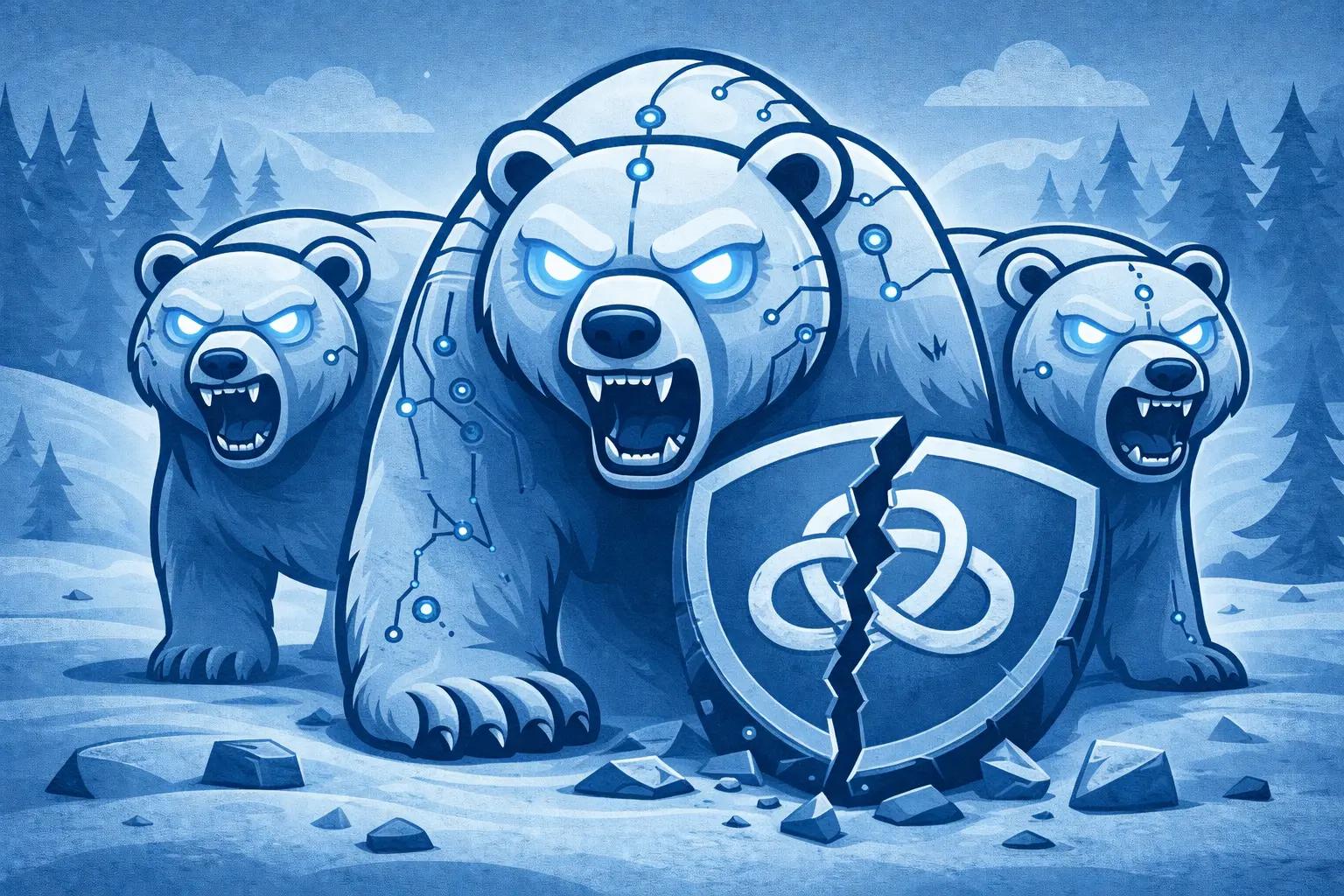
There's a reason Coca-Cola's polar bears became one of the most beloved advertising icons in history. For over three decades, those hand-crafted animated bears represented everything we associate with the holidays: warmth, family, joy, and that ineffable magic of Christmas. They weren't just mascots; they were emotional anchors that connected generations of consumers to feelings of comfort and nostalgia.
Then came 2024's AI-generated Christmas campaign, which is seeing a 2nd year of plays in 2025.
When Brand Heritage Meets Artificial Intelligence
The backlash was swift and visceral. Social media erupted with complaints that the AI-generated content felt "uncanny," "soulless," and "wrong." But why? On the surface, the ads still featured polar bears, snow, and Coca-Cola. The fundamental elements were there.
Yet something crucial was missing: humanity.
The Uncanny Valley of Brand Experience
What Coca-Cola's misstep reveals is a critical truth about AI in marketing, one that every brand leader needs to understand as we move into 2025. When consumers interact with AI-generated content, they're experiencing what psychologists call the "uncanny valley effect." The content is almost right, but not quite. It's familiar enough to recognize, but foreign enough to trigger an instinctive sense of unease.
The original polar bear ads were created by human artists who understood not just what Christmas looks like, but what it feels like. They knew when to hold on a moment of quiet joy, when to add a playful detail that makes you smile, when to build emotional resonance through pacing and composition. These aren't just technical decisions; they're deeply human ones.
The AI-generated version? It processed patterns. It identified visual elements associated with "Christmas" and "Coca-Cola" and "polar bears." But it couldn't replicate the intentionality, the craft, the soul that made the original campaign iconic.
Why This Matters More Than You Think
Here's what keeps me up at night: Coca-Cola is one of the world's most valuable brands, worth an estimated $97 billion. They have seemingly infinite resources, access to the best technology, and decades of brand equity to protect. If they got this wrong, what does that mean for the rest of us?
The answer is sobering: AI represents the single biggest risk to brand trust in 2026.
Not cybersecurity. Not market disruption. Not regulatory changes. AI. Specifically, the misuse of AI in customer-facing brand experiences.
The Trust Erosion Timeline
Brand trust doesn't collapse overnight. It erodes, gradually and insidiously:
Phase 1: Curiosity "Oh, they're using AI. That's interesting."
Phase 2: Unease "Something feels off about this. I can't quite put my finger on it..."
Phase 3: Recognition "This is AI-generated, isn't it? It feels so... artificial."
Phase 4: Alienation "This brand doesn't understand me anymore. They've lost what made them special."
Phase 5: Abandonment "I'm done. This isn't the brand I fell in love with."
Coca-Cola is somewhere between Phase 2 and Phase 3 with a significant portion of their audience. The question is whether they can course-correct before reaching Phase 4.
The Hidden Cost of "Efficiency"
I understand the appeal of AI in marketing. The promise of faster content creation, lower costs, infinite scalability. Who wouldn't want that?
But here's what the vendors won't tell you: Every efficiency gain comes with a trust tax.
When you replace human creativity with algorithmic generation, you're not just changing your production process; you're fundamentally altering the relationship between your brand and your customers. You're trading warmth for coldness, familiarity for foreignness, human connection for artificial approximation.
And your customers will notice. They might not consciously recognize what's changed, but their subconscious will register the difference. They'll feel it in their gut: something is wrong.
What We're Seeing at HT Blue
As a digital experience consultancy, we work with brands navigating their digital transformations every day. And increasingly, we're having difficult conversations about AI.
Clients come to us excited about ChatGPT, DALL-E, Midjourney, and the latest AI tools. They've read the case studies. They've seen the demos. They want to know: "How quickly can we implement this?"
Our answer is always the same: "Slower than you think. More carefully than you planned. With more human oversight than you budgeted for."
Because we've seen what happens when brands rush to AI without understanding the risks:
E-commerce brands whose AI-generated product descriptions sound professional but feel sterile, leading to lower conversion rates despite "optimized" copy.
Content publishers whose AI-assisted articles accumulate clicks but lose loyal readers who sense the decline in editorial voice.
Service providers whose AI chatbots technically answer questions but leave customers feeling unheard and frustrated.
Luxury brands whose AI-generated imagery is technically flawless but emotionally flat, eroding the premium positioning they've spent decades building.
The pattern is consistent: short-term metrics improve while long-term brand health deteriorates.
The Framework We Use to Protect Brand Trust
At HT Blue, we've developed what we call the Human-AI Collaboration Matrix. It helps our clients identify where AI can genuinely add value without compromising brand integrity:
Green Zone: AI-Assisted, Human-Led
Research and data analysis. Initial content drafts that humans extensively revise. Process automation that's invisible to customers. Personalization engines with human-defined rules.
Yellow Zone: Proceed with Extreme Caution
Customer service chatbots (with easy human escalation). AI-enhanced imagery in non-brand-critical contexts. Automated social media scheduling (not content creation). Predictive analytics for decision support (not decision-making).
Red Zone: Brand Risk Too High
Fully AI-generated brand campaigns. Unfiltered AI customer communications. AI-created content representing brand voice. Automated decision-making affecting customer experience.
Notice where Coca-Cola's Christmas campaign falls? Deep in the red zone.
The Questions Every CMO Should Ask
Before deploying AI in any customer-facing capacity, ask yourself:
- If customers knew this was AI-generated, would they care? If yes, that's your answer.
- Does this AI application enhance human creativity or replace it? Enhancement scales your team. Replacement erodes your brand.
- Can we articulate exactly what makes our brand voice unique? If not, AI will definitely get it wrong.
- Are we using AI because it's better, or because it's cheaper? Customers can tell the difference.
- What's our rollback plan if this damages brand perception? If you don't have one, you're not ready.
- Who on our team can recognize when AI output has crossed the line from helpful to harmful? This requires deep brand knowledge and creative judgment. You can't outsource it.
The Coca-Cola Lesson
Coca-Cola will likely recover from this misstep. They have enough brand equity, enough resources, and enough goodwill to course-correct. But they've also served as an expensive cautionary tale for the rest of us.
The lesson isn't "never use AI." It's "understand what you're risking when you do."
Every brand has core elements that define its relationship with customers: the emotional touchpoints that create loyalty and drive preference. For Coca-Cola, those Christmas polar bears were one of those touchpoints. They represented decades of carefully crafted emotional associations.
Handing that off to an AI algorithm? That wasn't innovation. That was abdication.
Moving Forward in 2026
As we move deeper into the AI era, the brands that thrive will be those that understand a fundamental truth: technology should amplify humanity, not replace it.
At HT Blue, we're committed to helping our clients navigate this landscape thoughtfully. We use AI tools extensively in our work for research, analysis, prototyping, and optimization. But we never lose sight of what creates lasting brand value: genuine human connection, authentic creative expression, and deep understanding of what makes people feel something.
The warmth of those original polar bears wasn't created by pixels on a screen. It was created by artists who understood the human heart. No algorithm can replicate that.
Not yet. Maybe not ever.
And honestly? I hope not ever.
Because the day we can't tell the difference between human creativity and machine generation is the day we've lost something irreplaceable. Not just in marketing, but in what it means to be human.
Want to discuss how to leverage AI without risking your brand equity? Let's talk. HT Blue specializes in digital transformations that enhance, not erode, the human connections that make your brand valuable.
Marla Quinn is Marketing Director at HT Blue, a digital experience consultancy specializing in enterprise content management, headless CMS implementations, and strategic digital transformation. She helps organizations navigate the intersection of technology innovation and brand integrity.