If you have ever been through a website redesign with an agency, you have probably heard the same promises.
“This time, we are going to fix your IA.”
“This time, your navigation will make sense.”
“This time, users will actually find what they are looking for.”
But somehow, it never quite happens. Agencies love to redesign navigation, rename sections, and shuffle content around, but they rarely fix the real problem. The truth is, most agencies do not actually understand what information architecture is.
IA is not about menu labels or sitemaps. It is not about where you put your “About Us” page or how many levels deep your “Resources” go. It is about the structure of meaning, and that begins with your data.
Agencies think IA starts with content. It does not.
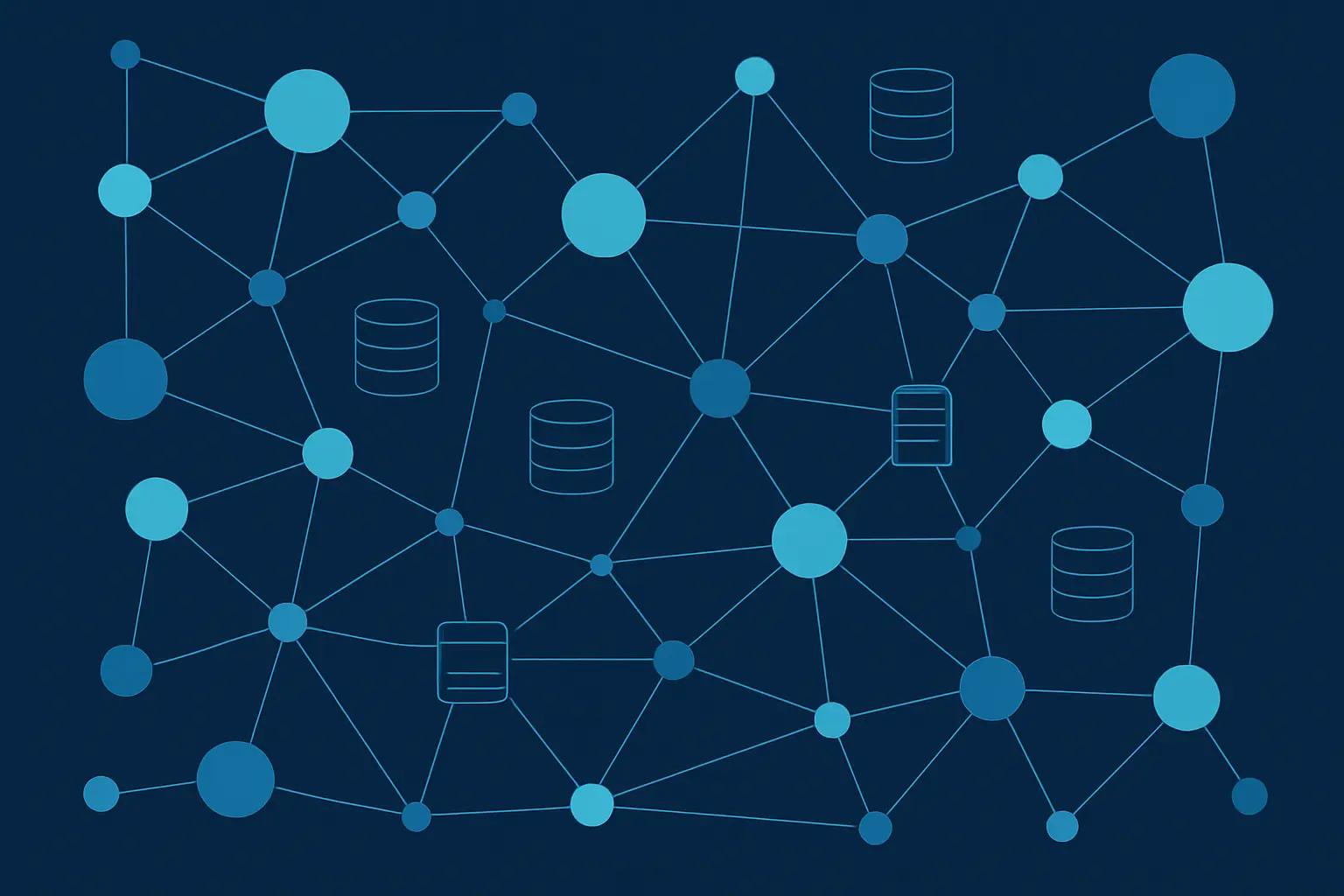
When I say “data,” I do not mean your blog posts or your case studies. I mean the underlying entities that make up your digital ecosystem. Your providers, your locations, your services, your specialties, your products, your audiences, your outcomes.
Every organization has these hidden building blocks sitting inside spreadsheets, CRMs, directories, or legacy CMS fields that have been mislabeled and misunderstood for years. If you do not start by mapping those entities, what they are, how they relate to each other, how they should connect, you are already lost.
And that is what most agencies miss. They jump straight to content hierarchy before defining the data hierarchy.
You cannot fix findability if your foundation is broken
If users often say “I cannot find anything on your site,” chances are it is not your UX or your labels. It is your data model.
When agencies do not take time to understand how your data behaves, they design navigation and search structures that break as soon as real content flows in. They design for the page instead of the entity.
So your “Find a Doctor” tool is disconnected from your “Specialties” section. Your “Services” do not match what is in your EHR feed. Your blog tags do not align with your business units.
That is not bad UX. That is bad data architecture pretending to be IA.
IA done right is data driven, not content driven
A good IA does not just organize content. It organizes meaning across systems. It defines how your organization’s knowledge is represented in a way that both humans and machines can understand.
When we build IA at HT Blue, we do not start with a sitemap. We start with a data model. We ask:
What are the primary entities your users need to connect?
What are their relationships?
How do they surface across different experiences such as search, navigation, personalization, and APIs?
How should your CMS reflect that model?
Only then do we layer content strategy, navigation, and taxonomy on top.
That is why when we talk about IA, we talk about ontology, taxonomy, and content modeling in the same sentence. Because IA without data architecture is just a prettier mess.
You cannot fix findability if your foundation is broken
If users often say “I cannot find anything on your site,” chances are it is not your UX or your labels. It is your data model.
When agencies do not take time to understand how your data behaves, they design navigation and search structures that break as soon as real content flows in. They design for the page instead of the entity.
So your “Find a Doctor” tool is disconnected from your “Specialties” section. Your “Services” do not match what is in your EHR feed. Your blog tags do not align with your business units.
That is not bad UX. That is bad data architecture pretending to be IA.
The future of IA is schema first
As digital experiences move toward composable, AI assisted, and API driven ecosystems, the old page based IA is collapsing.
Schema first IA, where the relationships between data are defined and governed, is how you achieve consistency across web, mobile, and voice.
AI can only be as smart as the structure it is given. If your data model is chaotic, your AI powered search, personalization, and content recommendations will be chaotic too.
So if your agency starts an IA project by asking about “menu items” instead of “data relationships,” it is time to find a new agency.
Closing thought
Most agencies design IA like interior decorators. They rearrange the furniture.
At HT Blue, we design IA like architects. We understand the foundation first.
Because until you understand your data, you will never truly understand your users.